
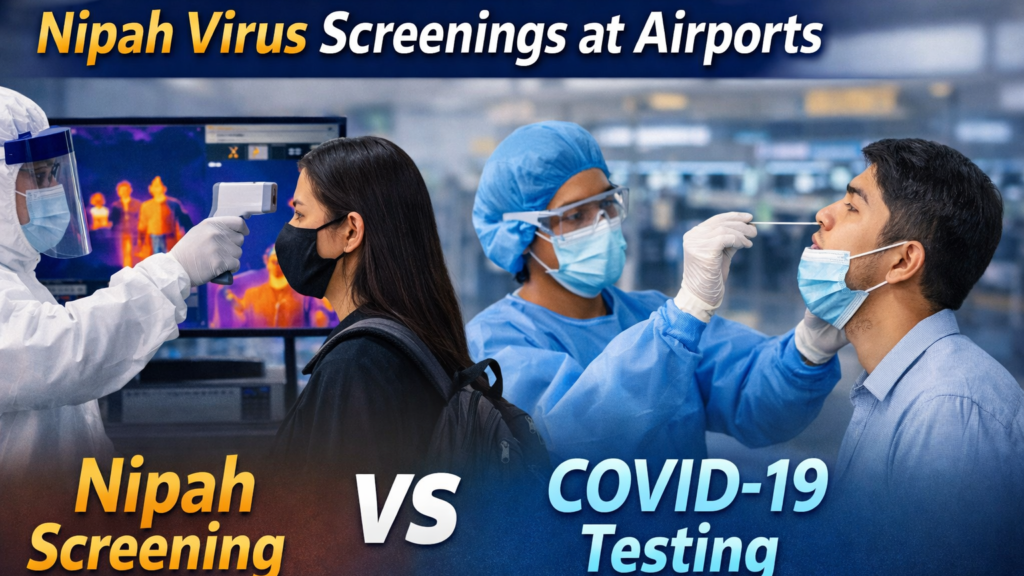
Airports across Asia are screening passengers again. But this feels different from COVID-19. West Bengal reported a Nipah virus attack with two confirmed and five suspected cases. Countries like Thailand, Nepal, and Taiwan started checking visitors coming from the areas. This virus scares health officers because it kills 40-75% of infected people.
Remember those harsh COVID-19 screenings with masks, tests, and quarantines everywhere mandatory? Nipah screenings work differently because the virus spreads differently than COVID did. Knowing these contrasts helps visitors know what to expect at airports now. Most people won’t face issues. But learning the process reduces fear fully.
What Makes Nipah Virus Different from COVID-19
Nipah virus comes from fruit bats and first leapt to humans in Malaysia. The 1999 attack taught scientists how quickly this virus can become scary. Fruit bats from the Pteropus family carry it naturally without getting sick. Humans catch it from contaminated food, mainly raw date palm sap.
Infected animals can spread it to people through close contact with them. Person-to-person transmission happens only through direct contact with bodily fluids exchanged. This differs hugely from COVID-19 which spreads through airborne droplets floating around. You can’t catch Nipah from someone breathing near you unlike coronavirus.
Signs start with fever, headache, muscle pain, and sore throat seeming normal initially. Then things turn bad fast with respiratory distress and brain inflammation happening. Encephalitis causes confusion, drowsiness, and coma within days of infection starting. The virus kills incredibly fast compared to COVID’s longer disease progression timeline.
No cure exists for Nipah Virus and no widely available vaccine guards against it. Doctors can only give supportive care by wishing the patient’s body would fight back. Early detection and isolation become vital for halting attacks from leaking widely. This high fatality rate explains why countries are taking screenings seriously now.
How Airport Screenings Nipah Virus Actually Work
Thailand’s major airports like Suvarnabhumi and Don Mueang started targeted screenings for West Bengal flights. Temperature checks happen first using infrared scanners for detecting fevers above 38°C quickly. Airlines perform pre-boarding health checks before passengers even reach immigration counters there. Health declaration forms ask about travel history and any symptoms experienced recently.
Screeners watch for severe fatigue, breathing problems, or confusion in walking passengers. Anyone showing symptoms gets pulled aside for medical evaluation immediately without exception. “Health Beware Cards” get issued to at-risk travellers for self-monitoring after arrival. Symptomatic passengers go straight to isolation rooms for RT-PCR testing.
Nepal intensified checks at Tribhuvan International Airport and all India border crossings. Medical staff assess travellers for fever and neurological symptoms carefully at checkpoints. Taiwan plans to classify Nipah as a top-tier notifiable disease requiring swift reporting. These measures aim at catching cases before they spread into communities.
The screenings work as triage by separating high-risk from low-risk travellers efficiently. Unlike COVID’s mass testing, Nipah screenings target only symptomatic or exposed people. No rapid tests exist at airports like COVID-19 had previously everywhere. Lab-based RT-PCR testing takes longer but remains the only reliable detection method.
What Travellers Should Know About Nipah Virus
Most travellers won’t face issues unless they visit outbreak zones or feel sick. Arriving early at airports helps because screenings might delay boarding slightly sometimes. Report your travel history to West Bengal honestly, even if asymptomatic currently showing. Health officials need this information to protect everyone travelling through airports daily.
Fever, headache, respiratory trouble, or haze must be reported directly to staff. Obeying the isolation guide isn’t optional but is a must for everyone’s safety. Try good hygiene by washing your hands often and avoiding touching your face. The risk stays low for most people without direct contact with cases.
Nipah Virus direct-contact transmission means casual airport interaction won’t spread it around. You don’t need masks or social distancing like COVID-19 required everywhere previously. Just be honest about symptoms and travel history when asked by officials. These targeted screenings protect communities without disrupting everyone’s travel plans unnecessarily like before.
Keep visiting The Ganga Times for such beautiful articles. Follow us on Facebook, Twitter, Instagram, and Koo for regular updates.