
“Faayda ye to hua naam tumhaara le kar
Chal padi saans meri jism ka bhaara le kar
Waqt-be-waqt badi door chala jaata hoon
Chand toote hue khwabon ka sahaara le kar
Zindagi sach mein tu jaadu hai to itna kar de
Laut ke aa mere bachpan ko dobaara le kar
Teri Khwahish hai agar ye to hichakta kyon hai
Aye mere dost ja tu sara ka sara lekar
Yun siyasat ne bhi tairayi hai kasti apni
Doobtey gaon ke hissey ka kinara lekar
Sari duniya mein yahi cheekhein sunayi di hain
Ja raha hai vo Filisteen humara lekar
Ab mere dil mein bahut dard bhara rahta hai
Tum chaley aao mohabbat ko khudara lekar”
– Sakib Mazeed
In India’s crowded media landscape, one name that is increasingly resonating with both readers and listeners is Sakib Mazeed, Known for his soulful ghazals. In his poetry innocence of childhood becomes the ultimate refuge, a place to return when reality feels too heavy. The sorrow of Palestine merges with the collective ache of humanity. Sakib Mazeed’s poetry often blends personal grief with political consciousness.
Sakib Mazeed straddles two worlds- the fast-paced newsroom and the stillness of poetry. His work as a journalist informs his art, while his verse gives depth to his reporting.
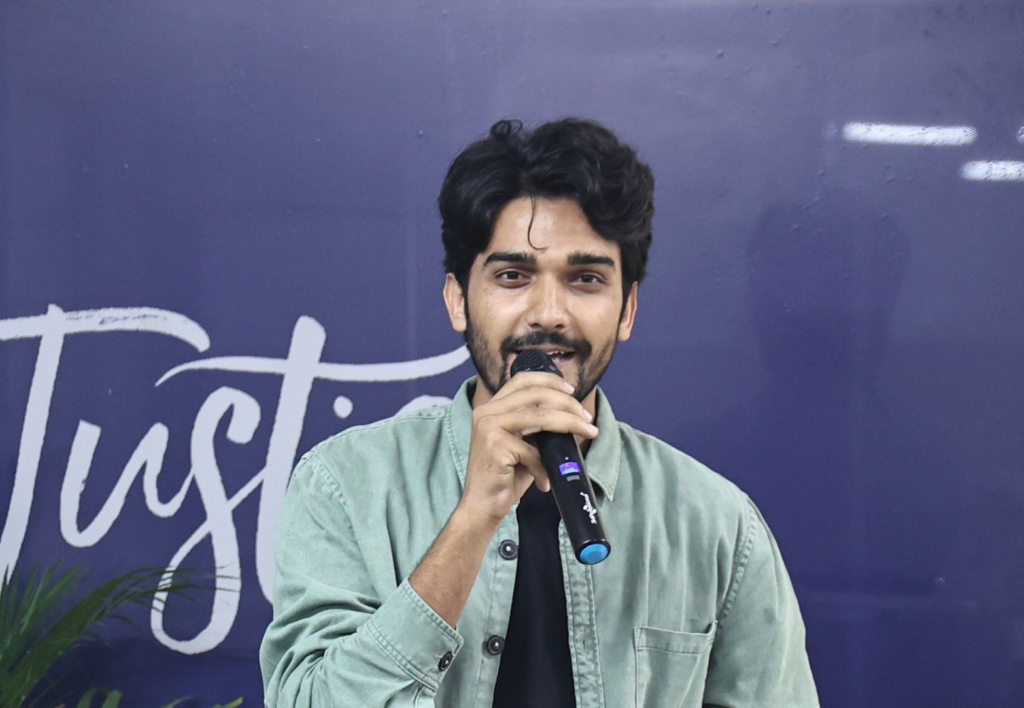
Ghazals That Carry Pain and Hope
Parallel to his newsroom work, Sakib Mazeed has emerged as a promising ghazal writer. His verses explore love, loss, injustice, and longing, weaving traditional Urdu imagery with modern sensibility.
“Jab gire zulf to fir usko sambhala jaye
Yun nigahon ka bharam dil mein utara jaye
Lab to majboor hain khamosh raha karte hain
Sochta hoon usey nazron se pukara jaye
Tumne jatey huye kuchh aisi kahi thi batein
Jo ki dil cheer dein aur seene mein bhala jaye
Aish-o-aram nahi ahal-e-karam fikra karein
cheekhte logon ke bhi muh mein niwala jaye
Usne basti ko hiqarat ki nazar se dekha
usko tohfey mein diya phool bhi kala jaye”
-Sakib Mazeed
Here, breath itself becomes a burden carried in the memory of a name, a metaphor that strikes both lyrical and emotional chords.
Sakib Mazeed’s ghazals stand out for several reasons. His verses are rich in imagery, using tactile and visual symbols like broken moons, heavy breaths, and scattered dreams that immediately evoke emotion. He brings emotional clarity to his work by avoiding abstraction, ensuring that both pain and hope are directly felt by the reader. His poetry uniquely blends the personal with the political, touching on private longings while also reflecting collective injustices. Additionally, the melody in his words makes his ghazals easily recitable, the flow of Urdu and Hindi adds a rhythm that resonates deeply in poetic programs.
“Dil ki batein duniya tak pahunchao to
Dard ghatega dard se bahar aao to
Duniya walon dukh ki jad ye duniya hai
Thoda thoda apne andar aao to
Sattadhari khud chaukhat tak aayenge
Satta ki aankhon se aankh milao to
Kabhi nahi mil sakta hai sach ka sooraj
Jhooton ki einton se eint bajao to”
– Sakib Mazeed
For him, the worlds of newsroom and ghazals exist in rare synergy. His journalism informs his poetry, providing stories of resilience, grief, and human experience, while his ghazals give these stories a lyrical, emotional depth, creating a cycle of reflection and empathy that bridges fact and feeling.
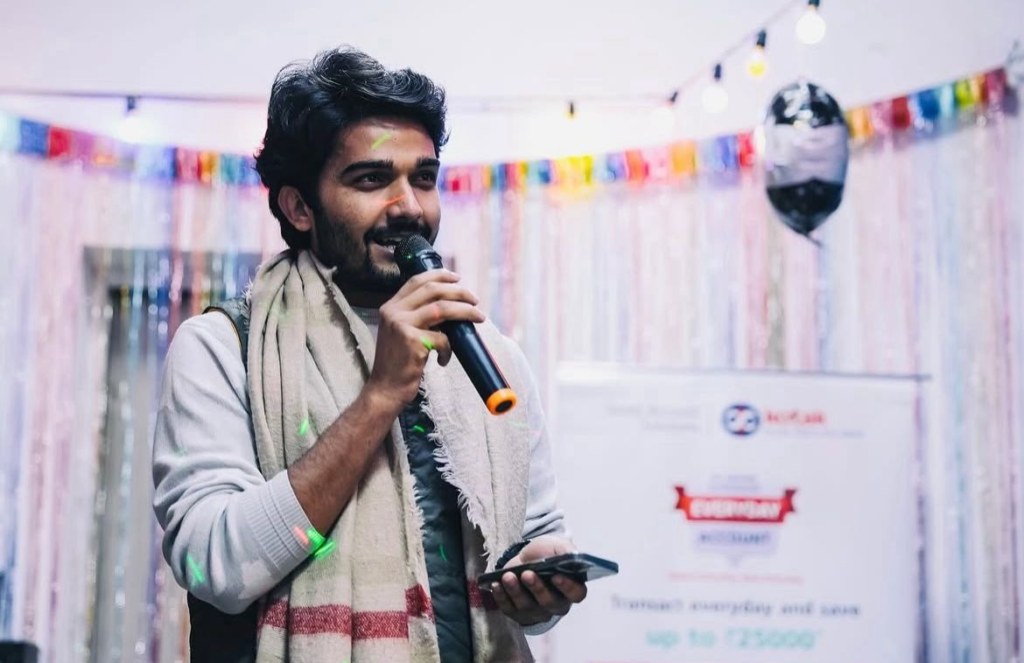
Between Newsroom and Performing Arts: A Rare Synergy
For Sakib Mazeed, poetry and journalism are not contradictions. His field reporting gives him stories of pain, resilience, and silence. His ghazals provide a language to process those stories at a human level.
“Bahut mashhoor hota ja raha hoon
Main khud se door hota ja raha hoon
Mera dil khali hota ja raha hai
Bahut majboor hota ja raha hoon
Nazar se uski aise gir raha hoon
Main chaknachoor hota ja raha hoon
Main uske khwab mein aane laga hoon
Nayan ka noor hota ja raha hoon”
– Sakib Mazeed
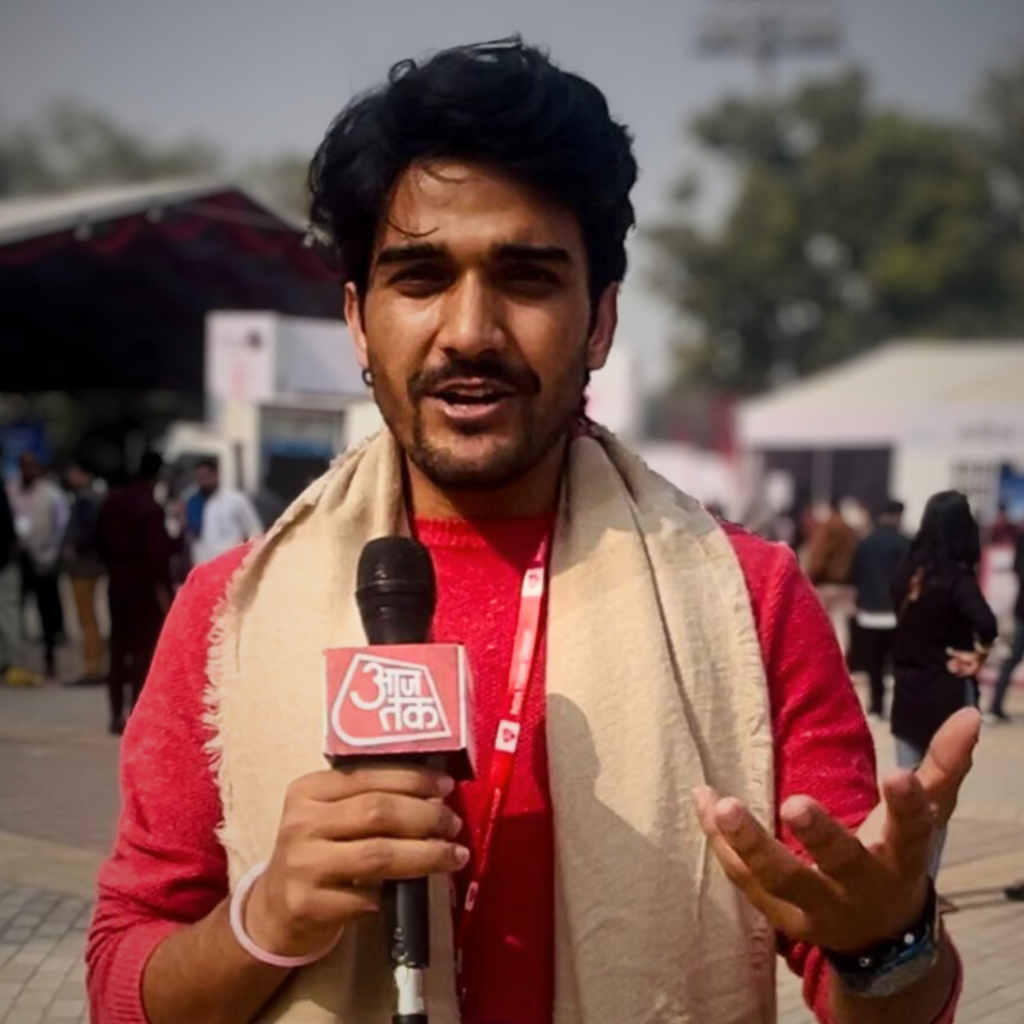
Adding yet another dimension, Sakib Mazeed is also a theatre artist. He has worked with Pierrot’s Troupe under the direction of M. Sayeed Alam, performing in acclaimed plays like ‘Ghalib in New Delhi’, ‘Akbar the Great Nahi Rahe’, and ‘Chacha Chhakkan in Action.’ His stage presence reflects the same passion for words and emotions that marks his writing.
“Khamosh rah kar bhi sab batana
Jab main na puchhunga tab batana
Badi mashaqqat se paya hoon main
Jo paas hai mere tana bana
Hawaein jakjhorti hain jab bhi
Hai meri aadat mein muskurana
Tere bina maa main kuchh nahi hoon
Teri duaa hai mera khazana”
-Sakib Mazeed
As a journalist, he informs. As a poet, he heals. As a theatre artist, he performs truth with both laughter and grief. And in doing so, Sakib Mazeed proves that literature, theatre, and journalism together can tell stories that statistics alone never could.