
International Day of Combating Sand and Dust Storms 2026 will be observed tomorrow, July 12. Check the date, history, importance, and why this UN day is celebrated.
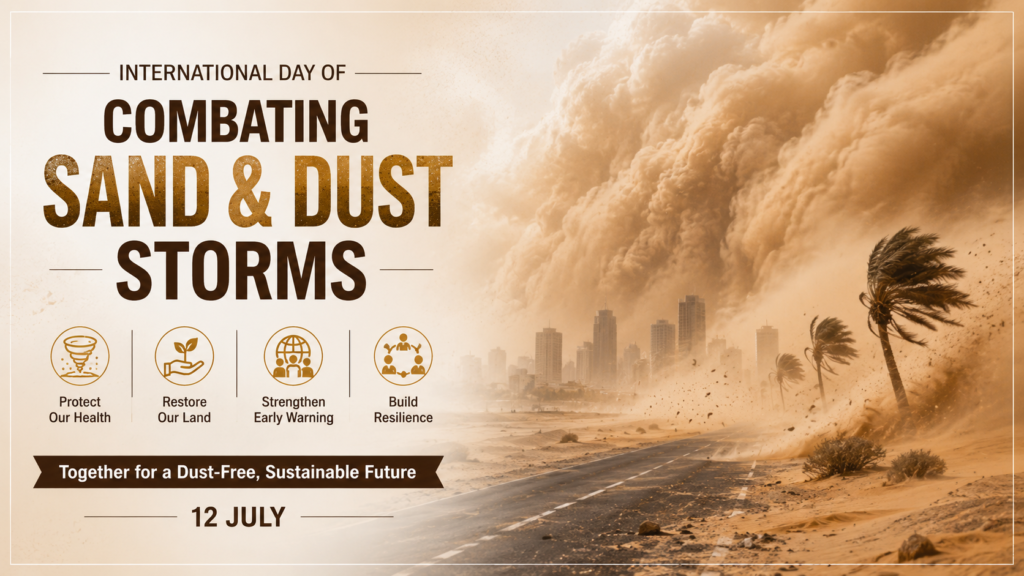
Every year, the International Day of Combating Sand and Dust Storms is observed to raise awareness about the harmful effects of sand and dust storms on human health, agriculture, transportation, and the environment. These storms affect millions of people worldwide and are becoming more frequent due to climate change, desertification, and poor land management. The United Nations encourages countries to work together to reduce the impact of these natural disasters through better planning, sustainable land use, and early warning systems.
International Day of Combating Sand and Dust Storms 2026 Date
The International Day of Combating Sand and Dust Storms 2026 date is Sunday, 12 July 2026. The day is celebrated every year on 12 July after it was officially proclaimed by the United Nations General Assembly in 2023.
Why Do We Celebrate International Day of Combating Sand and Dust Storms?
This international day is observed to educate people about the dangers caused by sand and dust storms. These storms can:
- Damage crops and reduce food production.
- Cause breathing problems and other health issues.
- Reduce visibility, leading to road and air accidents.
- Spread dust over thousands of kilometres.
- Increase desertification and land degradation.
The day also promotes sustainable farming, better land management, and global cooperation to reduce the impact of dust storms.
When Did We Start Celebrating International Day of Combating Sand and Dust Storms?
The United Nations General Assembly adopted Resolution A/RES/77/294 in 2023, declaring 12 July as the International Day of Combating Sand and Dust Storms. Since then, the day has been observed annually to encourage awareness, scientific research, and international action. The UN has also declared 2025–2034 as the United Nations Decade on Combating Sand and Dust Storms.
History of International Day of Combating Sand and Dust Storms
Sand and dust storms have existed for thousands of years, especially in desert regions. However, climate change, deforestation, excessive groundwater use, and poor land management have made these storms more frequent and severe. Recognising their growing impact on health, agriculture, and economies, the United Nations created this international observance in 2023. Today, it encourages countries to improve early warning systems, restore degraded land, and protect vulnerable communities.
Biggest Dust Storm in India
One of India’s deadliest dust storms struck Uttar Pradesh and Rajasthan on 2 May 2018. Winds exceeding 130 km/h destroyed homes, uprooted trees, and brought down electricity poles. According to official reports, more than 130 people lost their lives, while over 200 others were injured. Agra, Bharatpur, Alwar, Dholpur, and nearby districts were among the worst affected areas.
The disaster highlighted the importance of stronger weather forecasting systems and public awareness to reduce casualties during extreme weather events.
Famous Places in India to Visit for a Sand and Desert Experience
If you want to experience India’s desert landscapes safely, these destinations are among the best:
1. Jaisalmer, Rajasthan
Known as the Golden City, Jaisalmer is famous for the Sam Sand Dunes, camel safaris, desert camping, and cultural performances.
2. Bikaner, Rajasthan
Bikaner offers vast sand dunes, historic forts, and the famous Camel Festival, making it a popular desert destination.
3. Khuri Sand Dunes, Rajasthan
Located near Jaisalmer, Khuri is quieter than Sam and is perfect for visitors seeking a peaceful desert experience.
4. Osian, Rajasthan
Often called the Gateway to the Thar Desert, Osian is known for camel rides, sand dunes, and ancient temples.
5. Great Rann of Kutch, Gujarat
Although primarily a white salt desert, the surrounding region also offers sandy landscapes and is famous for the Rann Utsav.
Effects of Sand and Dust Storms
Sand and dust storms can have serious consequences, including:
- Respiratory diseases such as asthma and bronchitis.
- Reduced crop production.
- Damage to roads, buildings, and infrastructure.
- Flight delays and road accidents due to poor visibility.
- Loss of fertile soil and biodiversity.
According to the United Nations, around 330 million people in more than 150 countries are affected by sand and dust storms.
How Can We Reduce Sand and Dust Storms?
Everyone can contribute by:
- Planting more trees and protecting forests.
- Preventing excessive land degradation.
- Conserving water resources.
- Supporting sustainable agriculture.
- Following weather alerts during dust storms.
- Promoting renewable energy and climate-friendly practices.
Conclusion
The International Day of Combating Sand and Dust Storms 2026, observed on 12 July, reminds us that protecting land and the environment is essential for a healthier future. By restoring degraded ecosystems, improving land management, and supporting global cooperation, we can reduce the harmful effects of sand and dust storms on people, agriculture, and the planet.
Keep visiting The Ganga Times for such beautiful articles. Follow us on Facebook, Twitter, Instagram, and Koo for regular updates.