
Why do Pakistan railway trains still not run on electricity? Learn the history of Pakistan Railways, key challenges, comparison with India, and the benefits of railway electrification.
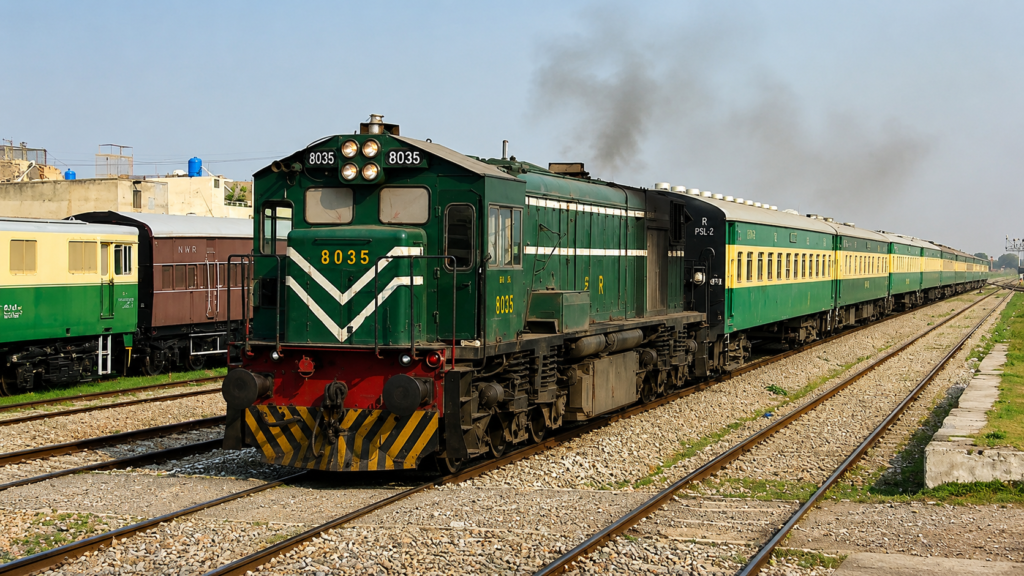
Railways are one of the most important modes of transportation in any country. While many nations have shifted to electric trains for faster, cleaner, and more affordable travel, Pakistan still operates almost all of its trains using diesel locomotives. Despite having one of South Asia’s oldest railway networks, Pakistan has not been able to build a modern electrified railway system.
In contrast, neighbouring India has electrified almost its entire broad-gauge railway network, making train travel more efficient and environmentally friendly. So, why has Pakistan not followed the same path? Here’s a detailed look at the history, challenges, and future possibilities.
Pakistan Railway Network at the Time of Independence (1947)
When British India was divided in 1947, Pakistan inherited a significant portion of the railway network built during the colonial era. At the time of independence, the country received around 8,100 kilometres of railway tracks, most of which were located in present-day Punjab and Sindh provinces.
The railway system was initially considered one of Pakistan’s strongest public transport networks. It connected major cities such as Karachi, Lahore, Rawalpindi, Peshawar, Quetta, and Multan, while also supporting trade and military movement. However, unlike many countries that later modernized their railway systems, Pakistan largely continued operating the inherited diesel-based infrastructure.
How Much Has Pakistan Expanded Its Railway Network?
Since independence, Pakistan has added only a limited number of new railway lines. Today, Pakistan Railways operates roughly 7,700–7,900 kilometres of track, depending on the source and operational status of certain routes. Instead of expanding rapidly, several branch lines were closed over the years because of financial losses, poor maintenance, and declining passenger numbers. As a result, the country’s railway network has seen only modest development over nearly eight decades.
Why Pakistan Railway Trains Do Not Run on Electricity
1. Lack of Investment
Railway electrification requires huge capital investment. Governments need to install overhead electric wires, build power substations, modernize signalling systems, and purchase electric locomotives. Pakistan has faced repeated economic challenges, making it difficult to allocate sufficient funds for such expensive infrastructure projects.
2. Poor Railway Infrastructure
Many railway tracks, bridges, and signalling systems in Pakistan are old and require modernization before electrification can be introduced. Without upgrading the existing infrastructure, running electric trains safely and efficiently becomes difficult.
3. Theft of Copper Wires
One of the biggest challenges faced by Pakistan Railways has been the theft of copper cables and railway equipment. Overhead electrification systems depend heavily on copper wires. Frequent theft of railway materials increases maintenance costs and discourages investment in electric infrastructure.
4. Administrative and Management Issues
Experts have often pointed to poor planning, delayed decision-making, and inconsistent railway policies as major reasons behind slow modernization. Frequent changes in government priorities have also affected long-term railway development projects.
5. Financial Losses
Pakistan Railways has reported financial losses for many years. Much of its available budget is spent on maintaining existing diesel operations rather than investing in new technologies like electrification.
6. Limited Power Infrastructure
Running electric trains requires a stable electricity supply. Pakistan has experienced power shortages and energy challenges for years, making railway electrification more complicated.
7. Shift Towards Road Transport
Over the past several decades, Pakistan invested more heavily in highways and road transport than in railway modernization. This reduced the railway sector’s share of passenger and freight transportation.
Did Pakistan Ever Have Electric Trains?
Yes. Pakistan once operated a limited electrified railway section between Lahore and Khanewal, covering around 290 kilometres. The route was electrified during the 1960s and electric locomotives operated successfully for several years. However, due to maintenance issues, lack of investment, equipment shortages, and operational difficulties, electric train services were eventually discontinued. Today, Pakistan no longer operates regular electric passenger trains.
India vs Pakistan: Railway Electrification
The difference between the two neighbouring countries is significant. India has invested heavily in railway modernization over the past two decades. Today, almost 100% of Indian Railways’ broad-gauge network has been electrified, making it one of the world’s largest electrified railway systems.
Pakistan, on the other hand, currently operates virtually all passenger and freight trains using diesel locomotives, with no active nationwide electrified railway network. India’s electrification has helped reduce fuel costs, improve train speeds, lower carbon emissions, and increase operational efficiency.
Top 5 Countries with the Largest Electrified Railway Networks
Several countries have built extensive electric railway systems to improve transportation and reduce dependence on diesel fuel.
- India
- China
- Russia
- Germany
- Japan
These countries have invested billions of dollars in electrification, allowing trains to operate faster, more efficiently, and with lower environmental impact.
How Pakistan Could Benefit from Electric Trains
If Pakistan decides to electrify its railway network in the future, it could bring several long-term benefits for both the country and its people. Electric trains are less expensive to operate than diesel locomotives, helping reduce fuel costs and dependence on imported oil. They also travel faster, allowing passengers to reach their destinations in less time.
Since electric trains produce fewer emissions, they can improve air quality and support environmental protection. Modern electric railways offer smoother, quieter, and more reliable journeys. Railway electrification can also boost the economy by lowering transport costs, creating new jobs, and strengthening energy security through the use of locally generated electricity.
Can Pakistan Railway Electrify Its Railways in the Future?
Experts believe Pakistan railway electrification is possible, but it will require long-term planning, stable government policies, international investment, and major infrastructure upgrades. Projects under regional connectivity initiatives and future railway modernization programmes may eventually provide opportunities for electrification. However, completing such a transformation would likely take many years and require substantial financial resources.
Pakistan railway inherited a well-developed railway network in 1947, but limited investment, financial constraints, ageing infrastructure, management challenges, and repeated maintenance issues have slowed its modernization. As a result, the country continues to rely almost entirely on diesel-powered trains, while neighbouring India has successfully electrified nearly its entire broad-gauge railway network.
If Pakistan invests in railway electrification in the coming years, it could reduce fuel expenses, improve passenger services, strengthen freight transportation, and lower environmental pollution. Although the transition would require significant funding and careful planning, an electric railway network could play an important role in the country’s future economic development.
Keep visiting The Ganga Times for such beautiful articles. Follow us on Facebook, Twitter, Instagram, and Koo for regular updates.