
Why do Indian trains have generators? Learn which trains use generator cars, why Vande Bharat doesn’t need them, fuel consumption, history, benefits, drawbacks, and alternative power systems in Indian Railways.
Why Indian Trains Have Generators
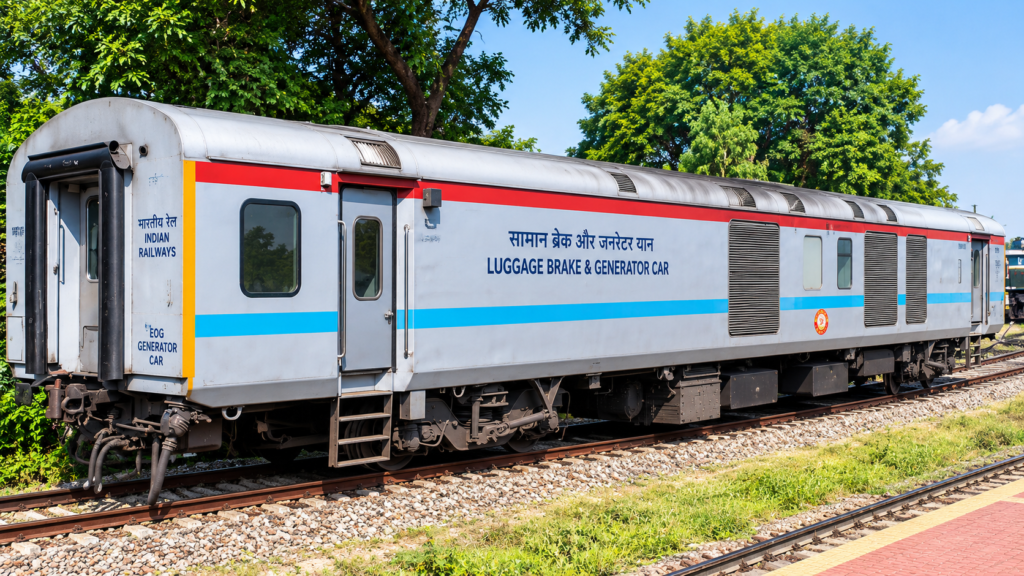
If you have ever travelled on a long-distance train like Rajdhani, Shatabdi, Duronto, or Mail and Express trains, you may have noticed a special coach with a loud engine sound placed at one or both ends of the train. This is known as the Generator Car or Power Car. Its main job is to provide electricity to the entire train during the journey. However, not every train in India has a generator coach. Modern trains like Vande Bharat Express and suburban local trains use completely different systems to supply electricity. Here’s everything you need to know.
Uses of Generators in Indian Trains?
Many long-distance Indian trains have generators coaches to provide electricity for passenger comfort and essential onboard services. These generators power air conditioners, lights, fans, charging sockets, pantry equipment, water pumps, CCTV cameras, digital display boards, and automatic doors in some trains. When electricity cannot be supplied directly from the locomotive or overhead electric wires, the diesel-powered generator coach ensures that all coaches receive a continuous and reliable power supply throughout the journey.
Which Indian Trains Have Generator Coaches?
Generator coaches are mostly used in premium and long-distance trains that require a continuous power supply for passenger amenities. These include Rajdhani Express, Duronto Express, older Shatabdi Express trains, selected Tejas Express services, premium Mail and Express trains, and several older LHB coach trains. Most of these trains use the End-on Generation (EOG) system, where one or two diesel-powered generator coaches provide electricity to the entire train throughout the journey.
Why Doesn’t Vande Bharat Train Have a Generator Coach?
Vande Bharat Express does not need a separate generator coach because it is a modern self-propelled electric trainset. It receives power directly from the 25 kV overhead electric line and distributes electricity to every coach through its built-in power system. The train also has battery backup for emergencies. This design saves space, reduces noise and fuel costs, lowers maintenance expenses, and allows more room for passenger seating, making the train more efficient and environmentally friendly.
Why Don’t Local Trains Have Generator Coaches?
Local trains in cities such as Mumbai, Delhi, Chennai, Kolkata, and Hyderabad do not require separate generator coaches because they receive a continuous supply of electricity from overhead electric wires or, in some systems, a third rail. This electricity powers both the train’s movement and onboard facilities like lights and fans. Since suburban trains run on fully electrified routes with frequent stops, there is no need for diesel-powered generator coaches.
What Is the Alternative so Indian Trains Do Not Have Generators?
Indian Railways is gradually replacing traditional diesel generator coaches with more efficient power supply systems. The most widely adopted technology is Head-on Generation (HOG), where the electric locomotive supplies electricity directly to all coaches, eliminating the need for separate generator cars. Modern trainsets like Vande Bharat Express use integrated power systems, while advanced trains also have battery backup to keep essential equipment running during temporary power interruptions. These technologies reduce fuel consumption, maintenance costs, and pollution while improving overall efficiency.
Benefits of Indian Trains Have Generators
Generator coaches have been an important part of Indian Railways for many years, especially on long-distance passenger trains. They provide a continuous and reliable power supply throughout the journey, ensuring that air conditioners, lights, fans, mobile charging points, pantry equipment, and water systems function without interruption. These coaches also keep essential services running during locomotive changes or temporary power failures, helping passengers enjoy a comfortable and hassle-free travel experience.
Disadvantages of Indian Trains Have Generators Coaches
Although generator coaches provide a reliable power supply, they also have several disadvantages. Diesel generators consume a large amount of fuel, increasing operating costs for Indian Railways. They produce loud engine noise, especially for passengers travelling near the generator coach. These generators also release carbon emissions, contributing to air pollution. Regular maintenance and servicing are required, adding to maintenance expenses. Additionally, a generator coach occupies valuable space that could otherwise be used for passenger seating or additional luggage capacity.
When Were Generator in Train First Used in Indian Railways?
Generator coaches started becoming common in Indian Railways during the 1960s and 1970s, when air-conditioned coaches were introduced on long-distance trains. As premium services such as Rajdhani Express expanded, dedicated diesel generator coaches were added to provide uninterrupted electricity for passenger amenities. Later, with the introduction of LHB coaches in the late 1990s, the End-on Generation (EOG) system became the standard for many premium trains. Today, Indian Railways is gradually replacing EOG with the more efficient Head-on Generation (HOG) system.
How Much Diesel Does an Indian Train Generator Consume?
The amount of diesel consumed by an Indian train’s generator coach depends on factors such as the number of coaches, air-conditioning load, weather conditions, passenger demand, and the generator’s capacity. On average, one generator set uses around 80 to 120 litres of diesel per hour under normal conditions. Since many premium trains operate with two generator sets, total fuel consumption can reach 160 to 240 litres per hour at full load. This high fuel usage is one of the key reasons why Indian Railways is increasingly adopting the Head-on Generation (HOG) system to reduce diesel consumption, operating costs, and pollution.
Keep visiting The Ganga Times for such beautiful articles. Follow us on Facebook, Twitter, Instagram, and Koo for regular updates.